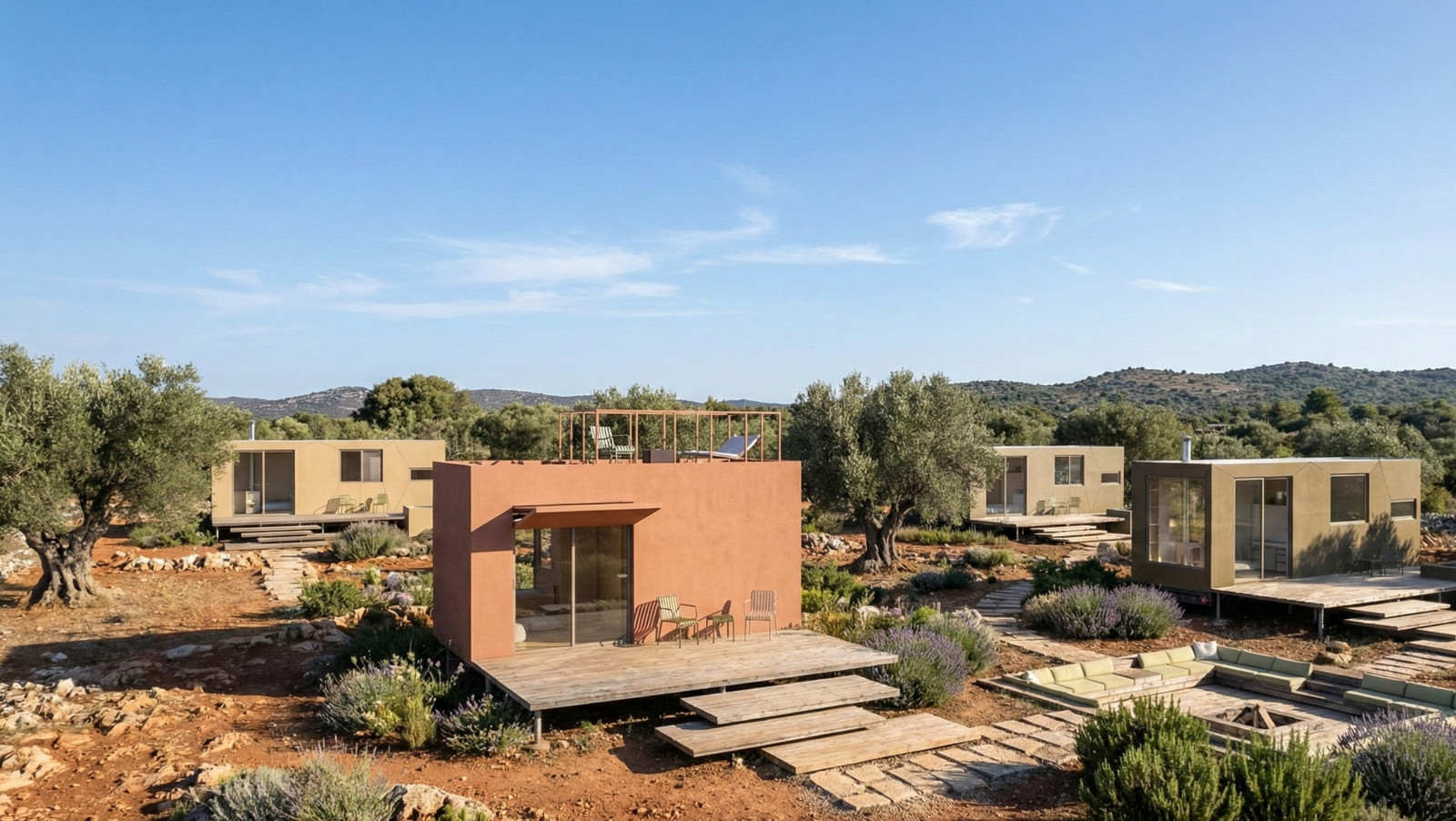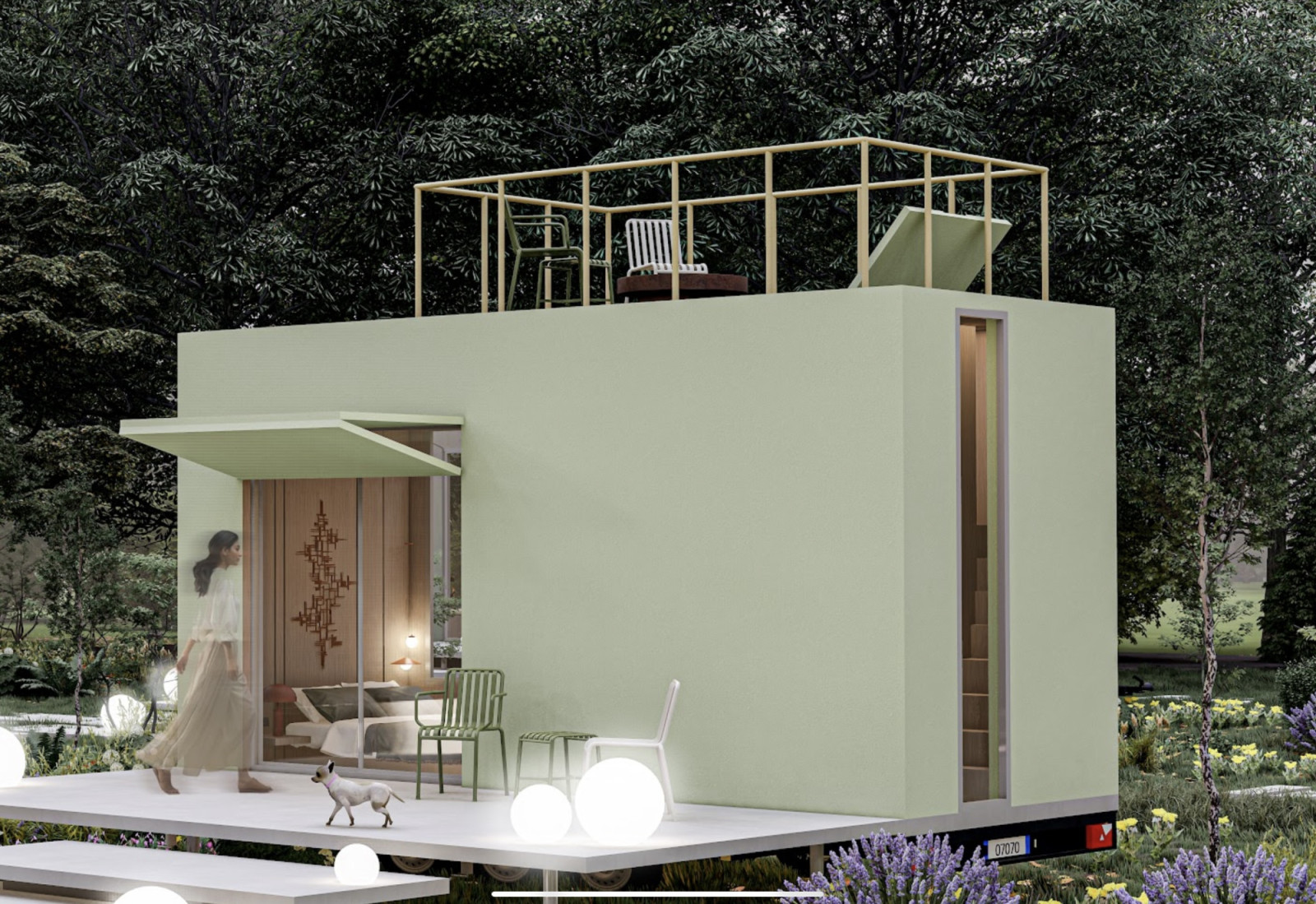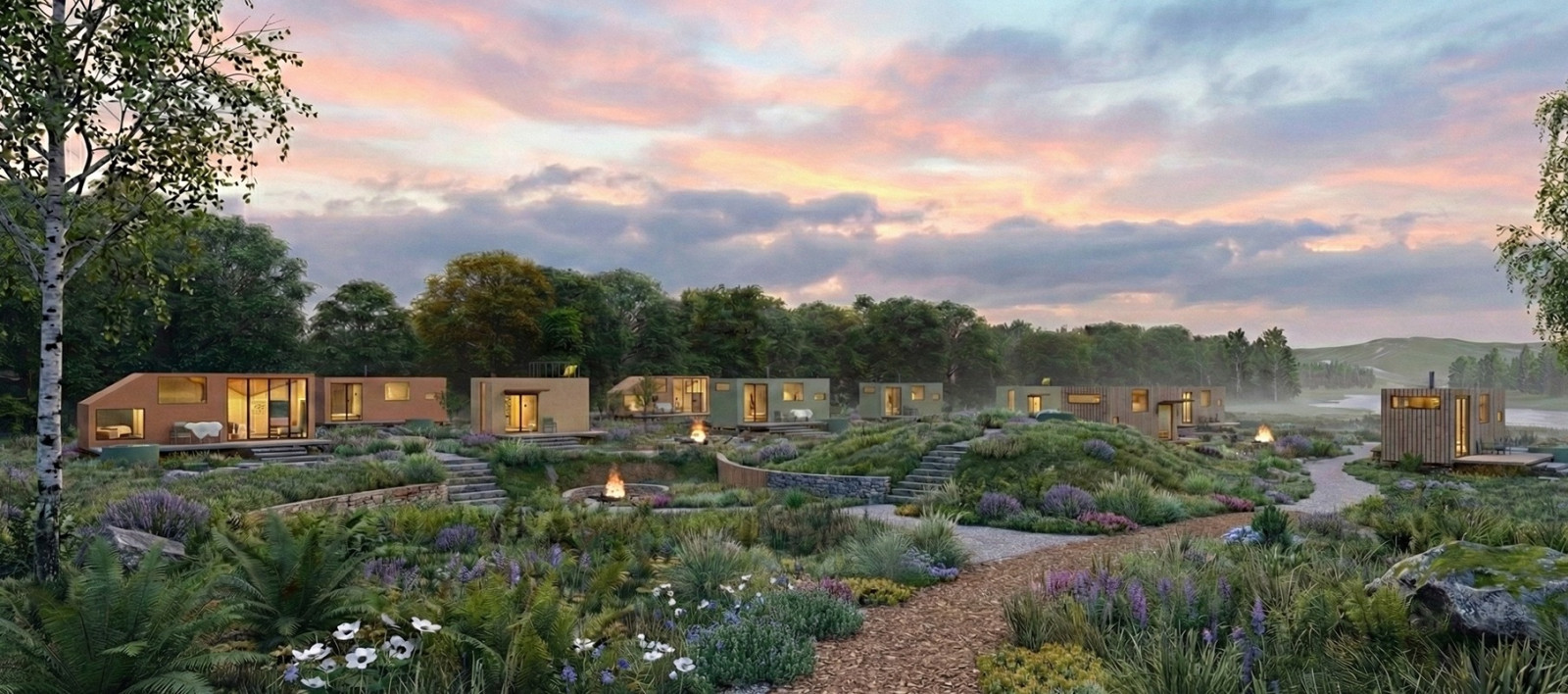


A tiny home doesn't have less room for art — it has less room for mistakes. In a 150–270 sq. ft. footprint, one well-sited piece does more than a wall of them, and scale, material, and placement matter more than quantity. That's the short answer. Here's the reasoning behind it, and how we think about it at Mori Cabin.
I get asked some version of "what do I put on the walls?" almost as often as I get asked about square footage. It's usually asked like an afterthought — like art is the last 5% after the architecture is settled. In a small space, it isn't. A piece that's the wrong scale, the wrong material, or hung in the wrong spot doesn't just look off — it competes with the one thing a cabin like this is supposed to do, which is get out of the way of the view.
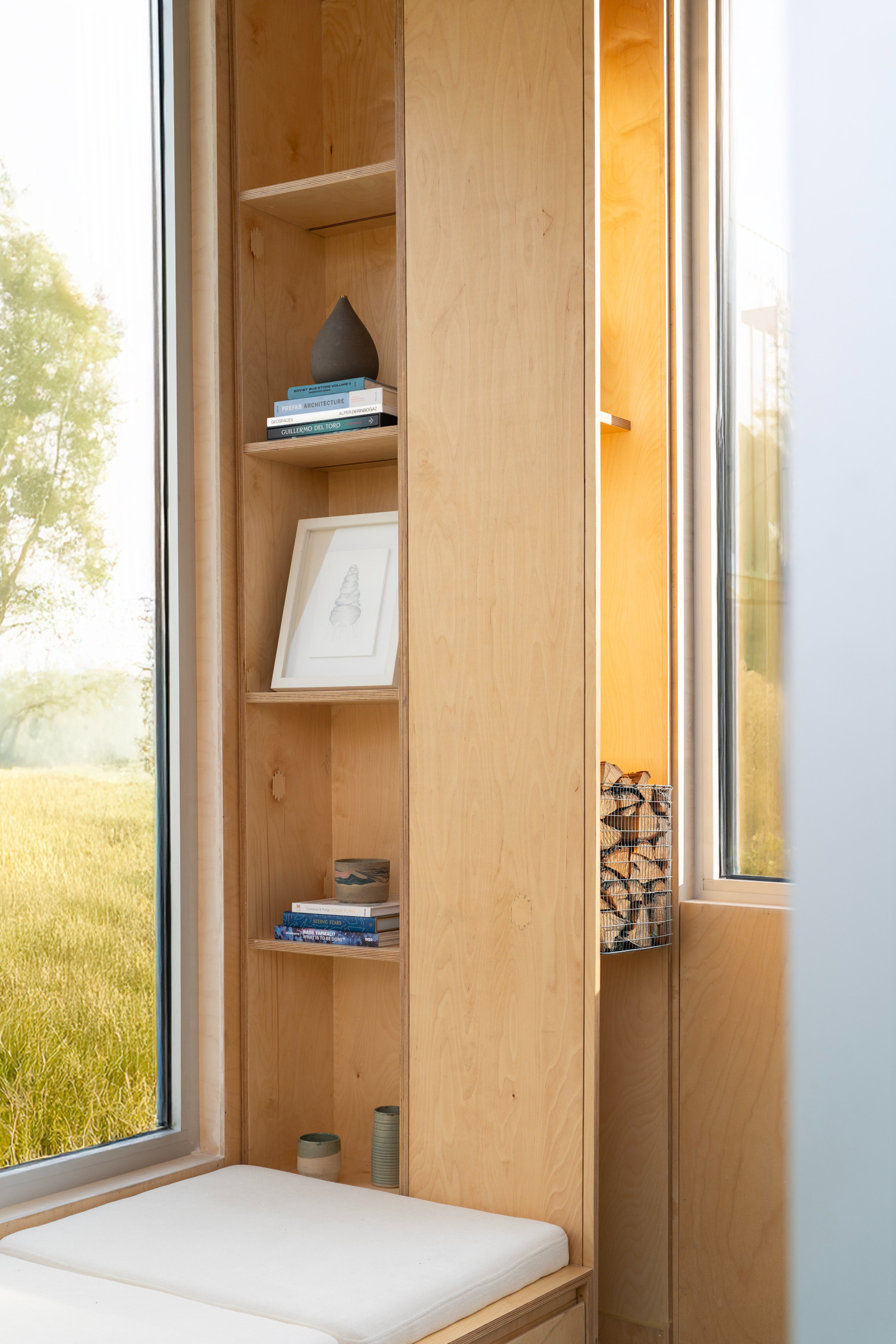
Most guidance on decorating small spaces defaults to generic advice: keep it minimal, use light colors, hang mirrors to "expand" the room. None of that is wrong exactly, but it treats art as a decorating problem rather than a design one. A tiny home has already made hard decisions about where light enters, where the eye is supposed to land, and how the interior relates to what's outside the window. Art placed without reference to those decisions fights the architecture instead of finishing it.
The commodity end of this market — mass-produced prints sized for a standard living room wall — makes this worse. Scaled-down decor for a scaled-down space isn't the same instinct as art chosen because it belongs in that specific room.
One piece, chosen for the room it's in. In 150–270 sq. ft., you don't have wall space to spare for a gallery arrangement. A single commissioned or considered piece, sized to a specific wall or nook, reads as intentional. Three or four smaller pieces competing for the same sightline reads as clutter, even if each one is good on its own.
Material over image. In a space built from a limited, considered material palette — wood, stone, glass, warm metal — a piece that adds another material to that conversation (ceramic, textile, patinated metal) tends to sit better than a framed print, which introduces a flat rectangle into a room defined by texture.
Siting the way you'd site a structure. Where does the light hit at the hour you're actually in the room? Where does your eye land first when you walk in the door? These are landscape and architecture questions before they're decorating ones — treat the artwork's placement with the same logic as the cabin's placement on the land.
Restraint as the design move, not the compromise. An empty wall in a small, well-lit room isn't unfinished — it's often the thing that makes the one piece you do hang actually register.
This is part of why our Wild Gradient edition — the collectible line within Mori Cabin — pairs each numbered unit with commissioned artwork through a gallery partnership, rather than treating art as generic staging. The piece is chosen for that specific cabin, not licensed as decor for any interior it might land in. It's a different logic than furnishing a rental unit, and it's the one we think actually holds up in a small space.
How do you decorate a tiny house without making it feel cluttered?
Choose one piece per wall or sightline, sized to that specific space, rather than grouping several smaller pieces together. In a small footprint, restraint reads as intentional; density reads as clutter.
What kind of art works best in a small cabin or tiny home?
Pieces that add material texture — ceramic, textile, natural pigment — tend to integrate better than framed prints, especially in cabins built from a limited palette of wood, stone, and glass.
Should every wall in a tiny house have art on it?
No. An empty, well-lit wall is often what makes the one piece you do hang read as deliberate rather than an afterthought.
Does art in a small space need to be scaled down?
Not necessarily — a single larger piece on the right wall often works better than several small ones, which can visually fragment a small room. Scale should match the wall and the sightline, not just the square footage.
If you're furnishing or styling a Mori Cabin and want to talk through how a piece fits your specific unit and site, I'm happy to walk through it directly. Request the 2026 spec and price catalog →
Enisé Burcu Derinboğaz is a landscape architect and the founder of Mori Cabin, a design-first modular cabin brand manufactured in Gebze, Turkey, with a Pennsylvania production facility currently in development. She has 20+ years of design and development experience as the founder of Praxis Landscape.